Mostrando entradas con la etiqueta pintura/painting. Mostrar todas las entradas

27 de octubre de 2014

Manos a la obra

Un papel en blanco y un boli en la mano izquierda. 
Hay quien tiene pánico escénico o fobia a las cucarachas, y yo tengo miedo a dibujar, así que estoy en terapia personal para superarlo. 
No uso lápiz para no poder borrar, muevo el boli rápido para no dudar, y tengo la cabeza en otras cosas para no pensar.
Supongo que lo que ven mis ojos es lo que se queda en el papel. 


Blank sheet, pen on my left hand. 
There are people who have stage fright or who have cockroaches phobia, I fear drawing, so I´m in personal therapy for getting over it. 
I don´t use pencil so that I can´t remove, I move quickly the pen for not vacillating, and I have my mind in other things for not thinking. 
I suppose that what my eyes see is what remains on the paper. 


6 de octubre de 2014

christian lezcano

Gran formato, gran paleta de colores, gran variedad de técnicas, grandes retratos. Todo de la mano del artista canario Christian Lezcano, que con sus botes de spray y sus brochas habla a través de las personas a las que retrata. Capaz de distorsionar la realidad sin perderla lo más mínimo.

Great format, great palette, great variety of techniques, great portraits. This is what the Canary artist Christian Lezcano does. He speaks through the people he paints with spray and brush. He is capable of distorting reality without loosing a bit of it.


Más acerca de Christian Lezcano
More about Christian Lezcano

17 de noviembre de 2013

Paint Up

Ayer conocí a Lana Chukri, artista y diseñadora, pero sobre todo una gran persona, muy inspiradora y llena de energía. Es una de las fundadoras de Dihzayners, el trabajo que se muestra hoy pertenece a la iniciativa Paint Up. A través de los colores, la ciudad de Beirut ahora es más hermosa y más propia de los ciudadanos que han participado en el proyecto. Lana nos demuestra como con entusiasmo y esfuerzo podemos hacer entre todos un mundo más hermoso, y en consecuencia, mejor.

Yesterday I met Lana Chukri, a designer and artist, but above all, a great and inspiring person, full of energy. She is one of the founding members of Dihzayners, and the work shown below belongs to the Paint Up initiative. Through colours, the City of Beirut has become more beautiful and part of the citizens that have participated in the project. Lana proves that with enthusiasm and effort we can make a better and more beautiful world.

"I love urban interventions & firmly believe that they can change and shape societies, as long as they are able to break the norms and limitations we are tied down by everyday."


All photos from tumbler

14 de septiembre de 2013

madre

En la Casa Museo Sorolla de Madrid se encuentra uno con la vida del artista Joaquín Sorolla. 
Supongo que el jardín, las estancias, los patios, las ventanas, le han enseñado al artista a comprender aún más la luz, y en sus cuadros, así la pinta. La pinta en su presencia, y en su ausencia, la pinta cuando es transparente y cuando está mojada. 

You can meet with Joaquín Sorolla´s life in his house and museum. The garden, the rooms, the patios and windows may have shown the artist to understand the light. He paints the light, when it is, and when it is not, when it is transparent and when it is wet.

                      Joaquín Sorolla, 1895. Madre. Óleo sobre lienzo, 125x169cm

10 de julio de 2013

mar

Cuando el óleo se vuelve mar. Obra de Karen Gunderson.
When oil becomes sea. Work by Karen Gunderson.


16 de mayo de 2013

Zobeida

Las Ciudades Invisibles, un libro de Italo Calvino. 
Ciudades imaginarias con nombres de mujer, es precioso perderte en estas páginas, es precioso imaginar estos lugares.
La ciudad de Zobeida es una ciudad soñada y construída, pero falta ella.

"Hacia allí, después de seis días y seis noches, el hombre llega a Zobeida, ciudad blanca, bien expuesta a la luna, con calles que giran sobre sí mismas como un ovillo.
Esto se cuenta de su fundación: hombres de naciones diversas tuvieron un sueño igual, vieron una mujer que corría de noche por una ciudad desconocida, la vieron de espaldas, con el pelo largo, y estaba desnuda. Soñaron que la seguían. A fuerza de vueltas todos la perdieron. Después del sueño buscaron aquella ciudad; no la encontraron pero se encontraron ellos; decidieron construir una ciudad como en el sueño. En la disposición de las calles cada uno rehizo el recorrido de su persecución; en el punto donde había perdido las huellas de la fugitiva, cada uno ordenó de otra manera que en el sueño los espacios y los muros, de modo que no pudiera escapársele más.
Esta fue la ciudad de Zobeida donde se establecieron esperando que una noche se repitiese aquella escena. Ninguno de ellos, ni en el sueño ni en la vigilia, vio nunca más a la mujer. Las calles de la ciudad eran aquellas por las que iban al trabajo todos los días, sin ninguna relación ya con la persecución soñada. Que por lo demás estaba olvidada hacia tiempo.
Nuevos hombres llegaron de otros países, que habían tenido un sueño como el de ellos, y en la ciudad de Zobeida reconocían algo de las calles del sueño, y cambiaban de lugar galerías y escaleras para que se parecieran más al camino de la mujer perseguida y para que en el punto donde había desaparecido no le quedara modo de escapar.
Los que habían llegado primero no entendían que era lo que atraía a esa gente a Zobeida, a esa fea ciudad, a esa trampa."


Invisible Cities, Italo Calvino.
Imaginary cities, called as women, is beautiful losing through these pages, is beautiful to imagine these places.
The city of Zobeide is dreamed and constructed, but she misses.

"From there, after six days and seven nights, you arrive at Zobeide, the white city, well exposed to the moon, with streets wound about themselves as in a skein. They tell this tale of its foundation: men of various nations had an identical dream. They saw a woman running at night through an unknown city; she was seen from behind, with long hair, and she was naked. They dreamed of pursuing her. As they twisted and turned, each of them lost her. After the dream they set out in search of that city; they never found it. but they found one another; they decided to build a city like the one in the dream. In laying out the streets, each followed the course of his pursuit; at the spot where they had lost the fugitive's trail, they arranged spaces and walls differently from the dream, so she would be unable to escape again. This was the city of Zobeide, where they settled, waiting for that scene to be repeated one night. None of them, asleep or awake, ever saw the woman again. 
The city's streets were streets where they went to work every day, with no link any more to the dreamed chase. Which, for that matter, had long been forgotten. 
New men arrived from other lands, having had a dream like theirs, and in the city of Zobeide, they recognized something of the streets of the dream, and they changed the positions of arcades and stairways to resemble more closely the path of the pursued woman and so, at the spot where she had vanished, there 
would remain, no avenue of escape. 
The first to arrive could not understand what drew these people to Zobeide, this ugly city, this trap."


dibujo de Aldo Rossi 
drawing by Aldo Rossi

3 de marzo de 2013

seduce

A Julia Randall le apasionan la pintura y de las bocas, esto es
lo que hace con el lápiz.

Julia Randall is crazy about painting and mouths, this is what she makes with pencils.


27 de febrero de 2013

womancolor

Copio acuarelas de mujeres porque me gustan, las acuarelas y las mujeres. Copio para que mi mano aprenda a jugar con el pincel, el pincel con el agua y el color, con el papel. 
Paul Rudolph, haciendo referencia a los proyectos de arquitectura, dijo: "Puedes copiar una vez, pero nunca dos."
Yo ya he copiado estos rostros una vez.

I copy women watercolors because i like them, watercolors and women. I copy so that my hand learns to play with the brush, the brush with the water and color, with the paper. Refering to architecture projects, Paul Rudolph said:
"You can copy once, but never twice."
I´ve already copied these faces once.


1 de diciembre de 2012

human-faced


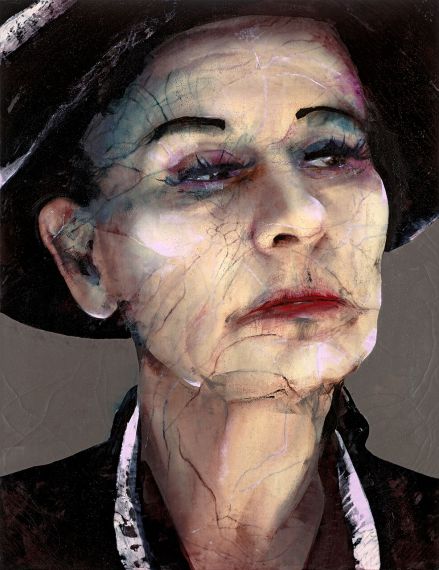
La pintora española Lita Cabellut descubre el Museo del Prado con trece años, se enamora de Goya, Velázquez, Ribera y Rembrandt. Lita retrata a gente, conocida, desconocida, de la calle. Sus rostros, expresiones van más allá de una descripción física, sus retratos hablan, de nosotros, de los humanos. 

The Spanish painter Lita Cabellut discovers the Prado Museum at the age of thirteen, she becomes amorous with Goya, Velázquez, Ribera and Rembrant. Lita paints portraits of people, well known, not  known, from the street. Her faces and expressions go further than a physical description, they talk, about us, about human.


"I married very young, my first marriage was with the art".

7 de noviembre de 2012

transición

Metamorphosis, del artista gráfico Cornelis Escher (1898-1972). 
Estos dibujos muestran multitud de objetos de naturaleza muy distinta, pero sin duda lo más interesante son los límites establecidos, el paso entre uno y otro, cómo y cuándo un objeto deja de ser uno para convertirse en otro, la transición.

Metamorphosis work, made by the graphic artist Cornelis Escher (1898-1972). 
In these drawings we can find different objects of very different nature, what i find more interesting are the limits, when or how one object stops to begin another one, this transition.

"I don't grow up. In me is the small child of my early days."
Escher

Metamorphosis I, 1937

Metamorphosis II, 1940


Metamorphosis III, 1968